
Lesson
Cover your cough. Care for others.
HCaring HealthcarePractice covering a cough or sneeze and cleaning your hands afterward.
Respiratory hygiene · Learn a simple routine that helps reduce the spread of germs.
Question
How can I help protect others when I cough or sneeze?
 How can I help protect others when I cough or sneeze?
Answer
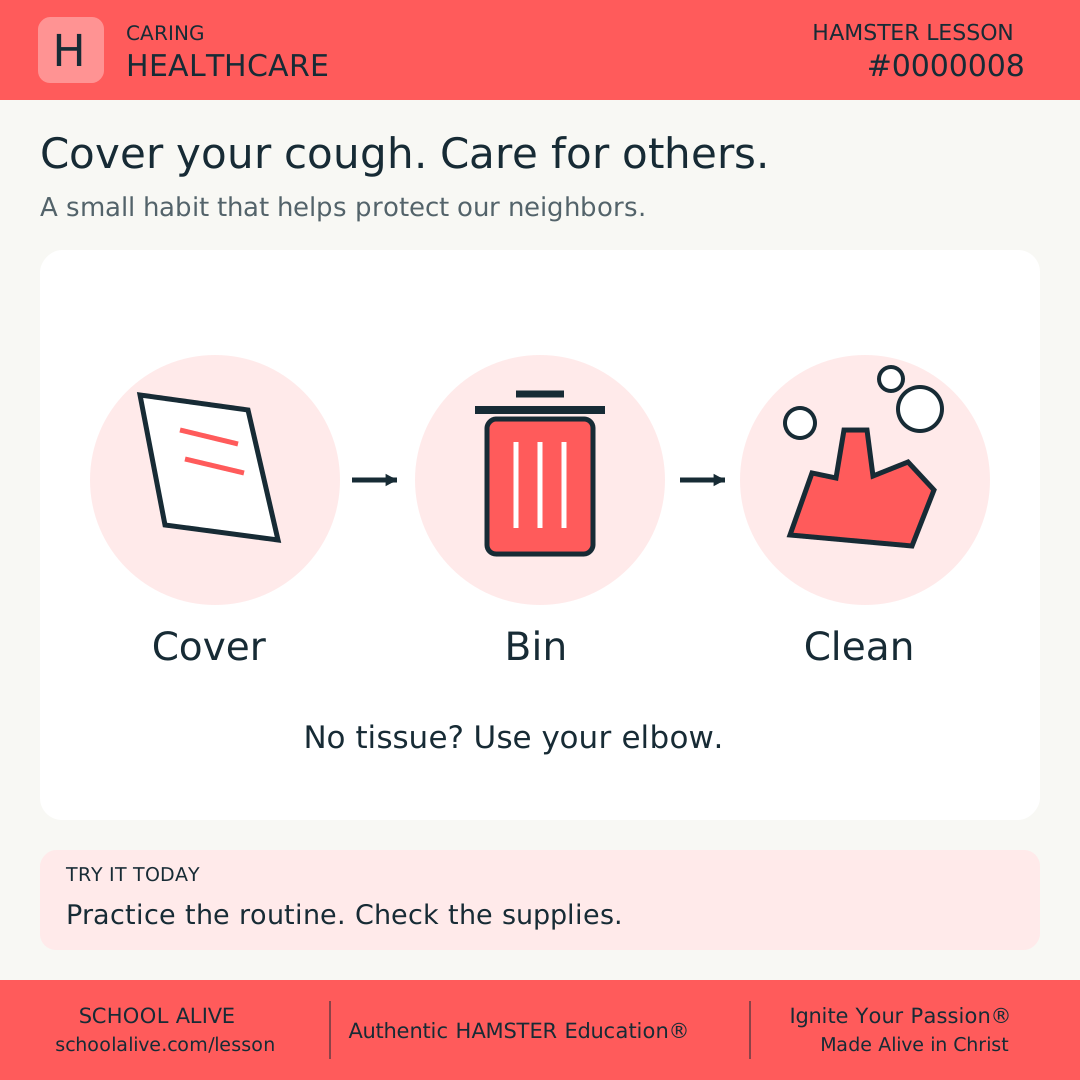
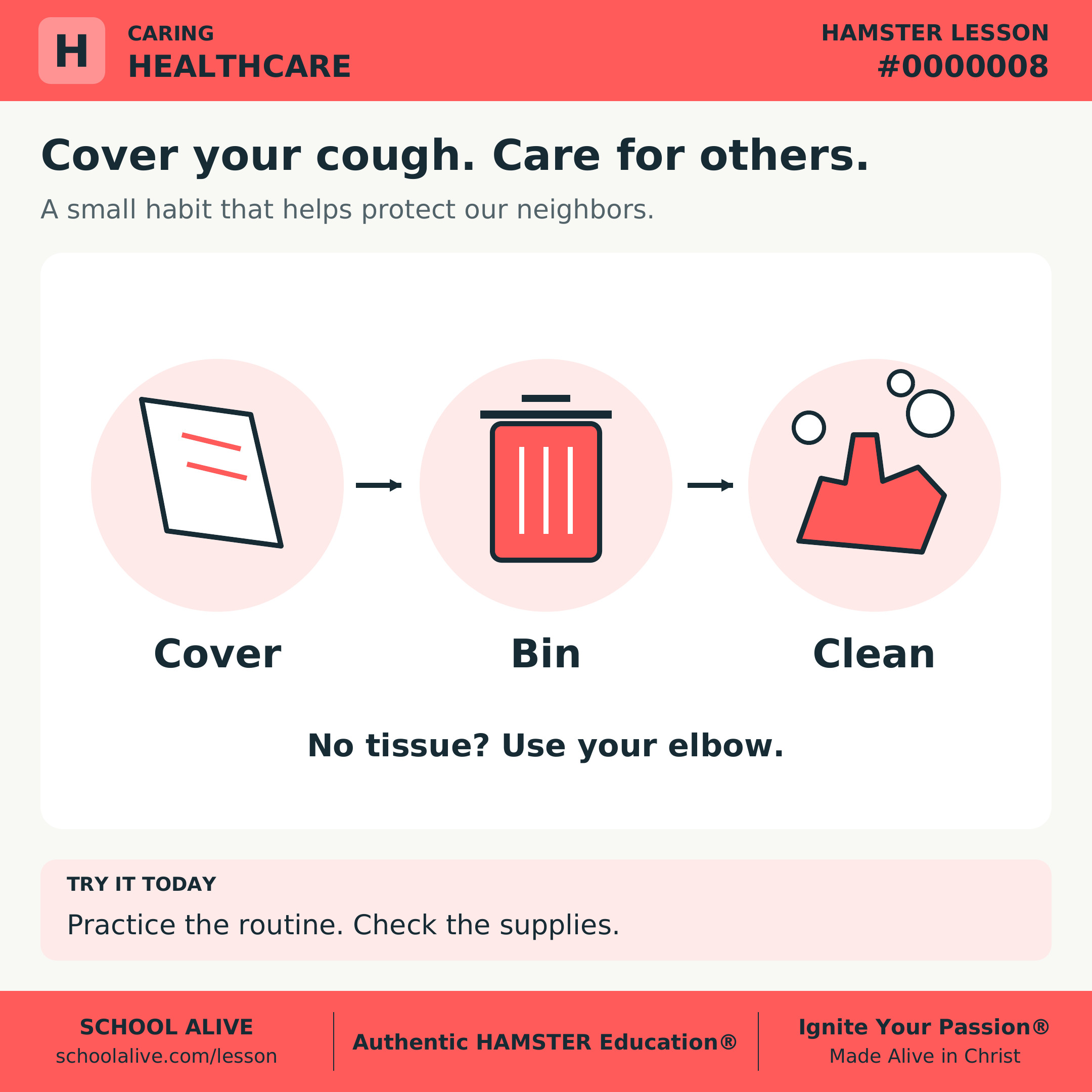
Cover your mouth and nose with a tissue, throw it away, and clean your hands. If no tissue is available, use the inside of your elbow instead of your hands.
 Cover your mouth and nose with a tissue, throw it away, and clean your hands. If no tissue is available, use the inside of your elbow instead of your hands.
History
In 2007, CDC guidance added respiratory hygiene and cough etiquette to Standard Precautions in healthcare. Lessons from the 2003 SARS outbreaks helped show why prevention should begin when a person first enters a clinic.
 In 2007, CDC guidance added respiratory hygiene and cough etiquette to Standard Precautions in healthcare. Lessons from the 2003 SARS outbreaks helped show why prevention should begin when a person first enters a clinic.
Example
If a sneeze surprises you in class and you have no tissue, cover it with your elbow. Afterward, clean your hands and ask a teacher for supplies if you need them.
 If a sneeze surprises you in class and you have no tissue, cover it with your elbow. Afterward, clean your hands and ask a teacher for supplies if you need them.
Insight
A hand used to cover a cough can carry germs to shared objects or your face. Covering and hand cleaning work together; neither promises that nobody will get sick.
 A hand used to cover a cough can carry germs to shared objects or your face. Covering and hand cleaning work together; neither promises that nobody will get sick.
Connection
Caring for others includes ordinary habits that reduce avoidable risks. Remind a friend kindly, and offer a tissue without teasing someone who coughs.
 Caring for others includes ordinary habits that reduce avoidable risks. Remind a friend kindly, and offer a tissue without teasing someone who coughs.
Challenge
Without actually coughing, practice the tissue–trash–clean hands routine. Then point out where tissues, a bin, and handwashing supplies are available. Tell a trusted adult if something is missing.
 Without actually coughing, practice the tissue–trash–clean hands routine. Then point out where tissues, a bin, and handwashing supplies are available. Tell a trusted adult if something is missing.
Dive deeper
Context
Respiratory hygiene means everyday habits that help reduce the spread of germs from the nose and mouth. It is a practical part of caring for shared spaces.
Understand the idea
Coughs and sneezes can release germs. A tissue helps contain them, but the used tissue must go into a bin. If there is no tissue, the inside of the elbow is a better place to cover than the palms that touch pencils, door handles, and food.
Cleaning hands afterward completes the routine. Use soap and clean running water, scrubbing for at least 20 seconds, then rinse and dry. If these are unavailable, a hand sanitizer with at least 60% alcohol is an alternative used according to its label and with adult guidance for children.
Good routines also need accessible supplies. A kind reminder is useful, but someone may need a tissue, help reaching a sink, or permission to leave class. Tell a trusted adult when you feel unwell and follow the school’s health guidance. This activity practices a habit; it is not a test for infection.
Plan a care station
- On paper, draw a simple route from a tissue box to a bin and a handwashing area. Do not use real coughs or shared used tissues for the activity.
- Rehearse the motions with a clean tissue, then explain the elbow option. Practice normal handwashing at the appropriate time.
- Check that everyone can reach the supplies. Suggest one improvement to a trusted adult and explain how it would help.
Discuss together
- Why might clean-looking hands still need washing after a cough or sneeze?
- How could you remind someone kindly while respecting that coughing does not always mean a person is contagious?
Introducing Microlessons
One idea. Seven steps. A practical discovery.
Begin with a question and a clear answer. Explore the history, an example, and a deeper insight. Connect the idea to everyday life, then put it into practice.
Read on your own or talk it through together. Each prepared edition includes a shareable image, concise text, and a one-page PDF.
How the 7 steps work
Each lesson moves from curiosity to understanding to practical action. Here is what each step contributes.
Question
Opens a question worth exploring and gives the lesson a clear purpose.
Answer
Gives a clear starting point that the rest of the lesson helps us understand.
History
Shows how people encountered the idea and how their discoveries shaped what we know.
Example
Makes the idea concrete through a situation, demonstration, or worked example.
Insight
Draws out the deeper principle so we understand why the idea matters.
Connection
Connects the idea to other disciplines, our faith, and everyday life.
Challenge
Turns understanding into action through something to try, practice, or explain.