
Lesson
Clean hands. Practical care.
HCaring HealthcarePractice handwashing as an everyday act of care.
Personal hygiene · Learn how careful handwashing helps protect our health and the people around us.
Question
Why does washing our hands take more than a quick rinse?
 Why does washing our hands take more than a quick rinse?
Answer
Washing with soap and clean, running water helps remove dirt and germs. Scrubbing gives us time to clean the places we often miss.
 Washing with soap and clean, running water helps remove dirt and germs. Scrubbing gives us time to clean the places we often miss.
History
In 1847, physician Ignaz Semmelweis introduced hand cleansing with an antiseptic solution in a maternity clinic, helping reduce deaths from childbed fever. Careful observation changed how people cared for patients.
 In 1847, physician Ignaz Semmelweis introduced hand cleansing with an antiseptic solution in a maternity clinic, helping reduce deaths from childbed fever. Careful observation changed how people cared for patients.
Example
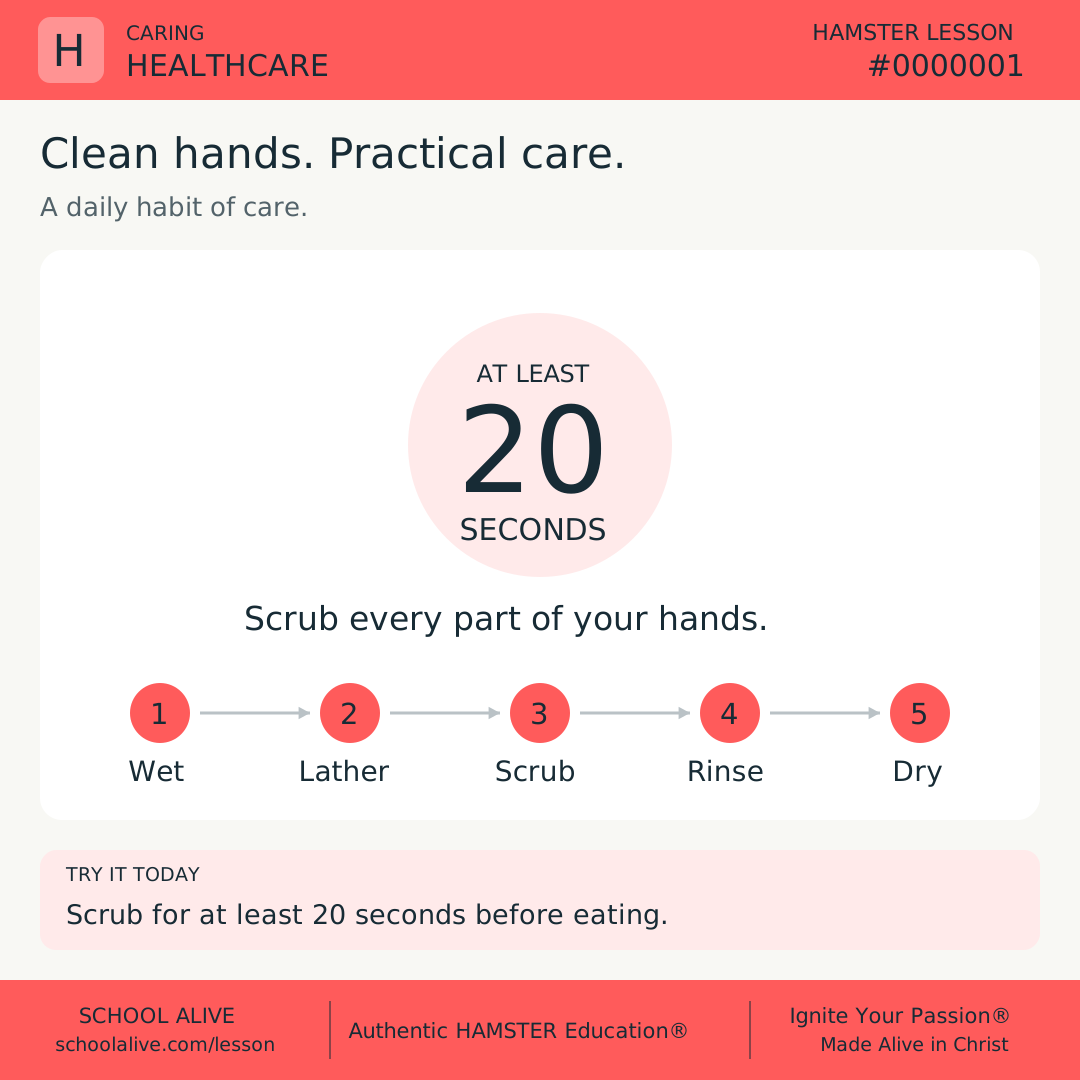
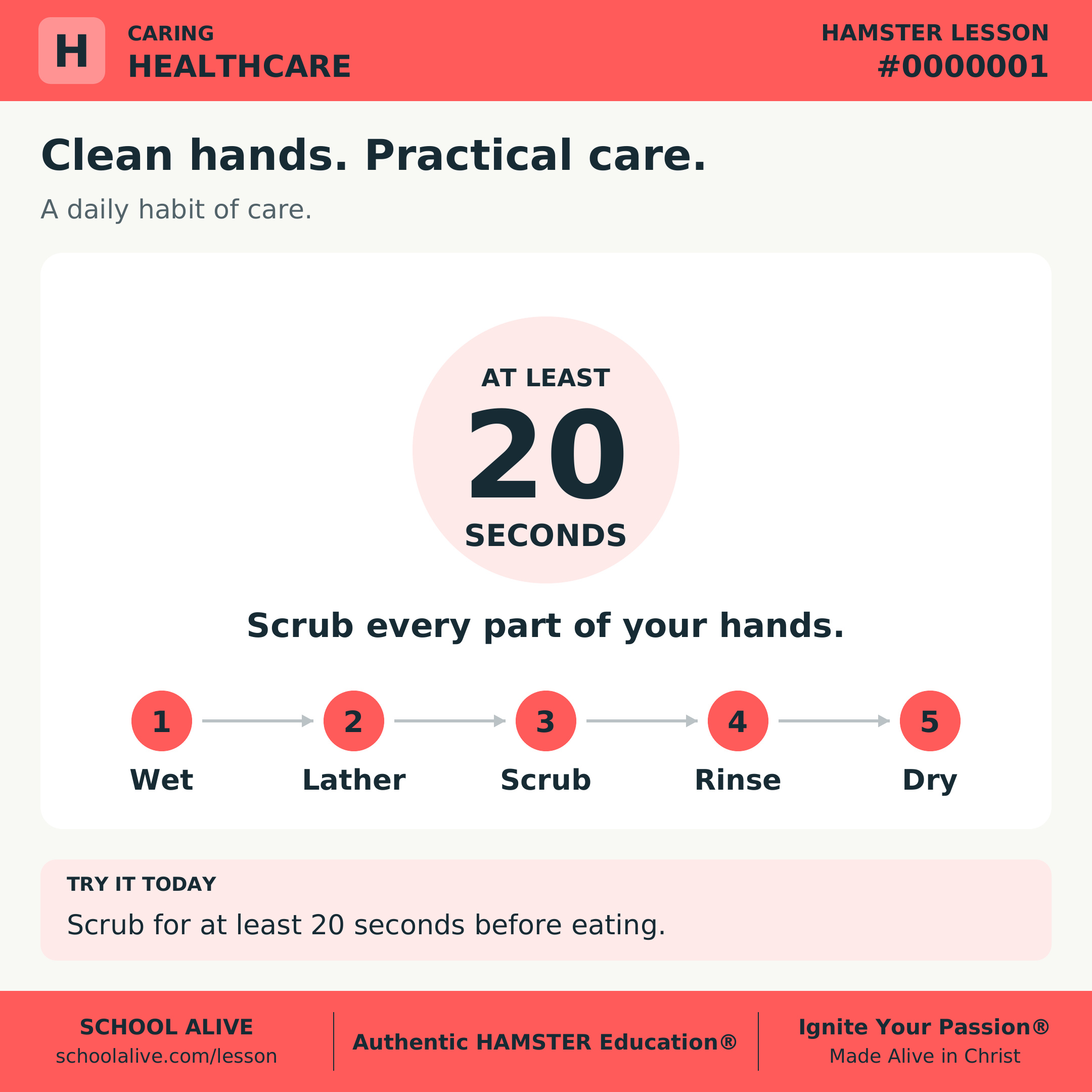
Wet your hands, apply soap, and scrub for at least 20 seconds. Include your palms, the backs of your hands, between your fingers, and under your nails. Rinse and dry thoroughly.
 Wet your hands, apply soap, and scrub for at least 20 seconds. Include your palms, the backs of your hands, between your fingers, and under your nails. Rinse and dry thoroughly.
Insight
Hands can look clean and still carry germs. Good habits matter even when the reason for them is too small to see.
 Hands can look clean and still carry germs. Good habits matter even when the reason for them is too small to see.
Connection
Washing before eating and after using the restroom is a practical way to care for ourselves and our neighbors. Caring often begins with ordinary acts of faithfulness.
 Washing before eating and after using the restroom is a practical way to care for ourselves and our neighbors. Caring often begins with ordinary acts of faithfulness.
Challenge
Before your next meal, follow the five steps and use a 20-second timer while scrubbing. Teach the routine to someone in your family. Explain why both scrubbing time and cleaning every part of your hands matter.
 Before your next meal, follow the five steps and use a 20-second timer while scrubbing. Teach the routine to someone in your family. Explain why both scrubbing time and cleaning every part of your hands matter.
Dive deeper
Context
Handwashing is a form of prevention: a small habit that helps interrupt the movement of germs from hands to food, faces, and other people.
Understand the idea
Soap and rubbing loosen dirt, oils, and microbes so running water can carry them away. A quick rinse skips much of that work. The CDC recommends scrubbing with soap for at least 20 seconds, including the backs of the hands, between the fingers, and under the nails.
Time and coverage work together. Twenty seconds spent rubbing only your palms leaves other areas neglected. Hands can also look clean while carrying germs, so appearance alone cannot tell us when washing is needed.
Try a coverage check
- Trace both sides of a hand on paper. Mark the fingertips, thumbs, spaces between fingers, and backs of the hands.
- At your next normal handwashing, use a 20-second timer for scrubbing. Notice which marked areas you might otherwise miss, then rinse and dry.
- Explain to someone why both soap and careful coverage matter. A timer checks time; it does not measure how many germs remain.
Discuss together
- Which parts are easiest to miss, and what routine would help you remember them?
- How can caring for your own hands also be an act of care for a neighbor?
Introducing Microlessons
One idea. Seven steps. A practical discovery.
Begin with a question and a clear answer. Explore the history, an example, and a deeper insight. Connect the idea to everyday life, then put it into practice.
Read on your own or talk it through together. Each prepared edition includes a shareable image, concise text, and a one-page PDF.
How the 7 steps work
Each lesson moves from curiosity to understanding to practical action. Here is what each step contributes.
Question
Opens a question worth exploring and gives the lesson a clear purpose.
Answer
Gives a clear starting point that the rest of the lesson helps us understand.
History
Shows how people encountered the idea and how their discoveries shaped what we know.
Example
Makes the idea concrete through a situation, demonstration, or worked example.
Insight
Draws out the deeper principle so we understand why the idea matters.
Connection
Connects the idea to other disciplines, our faith, and everyday life.
Challenge
Turns understanding into action through something to try, practice, or explain.